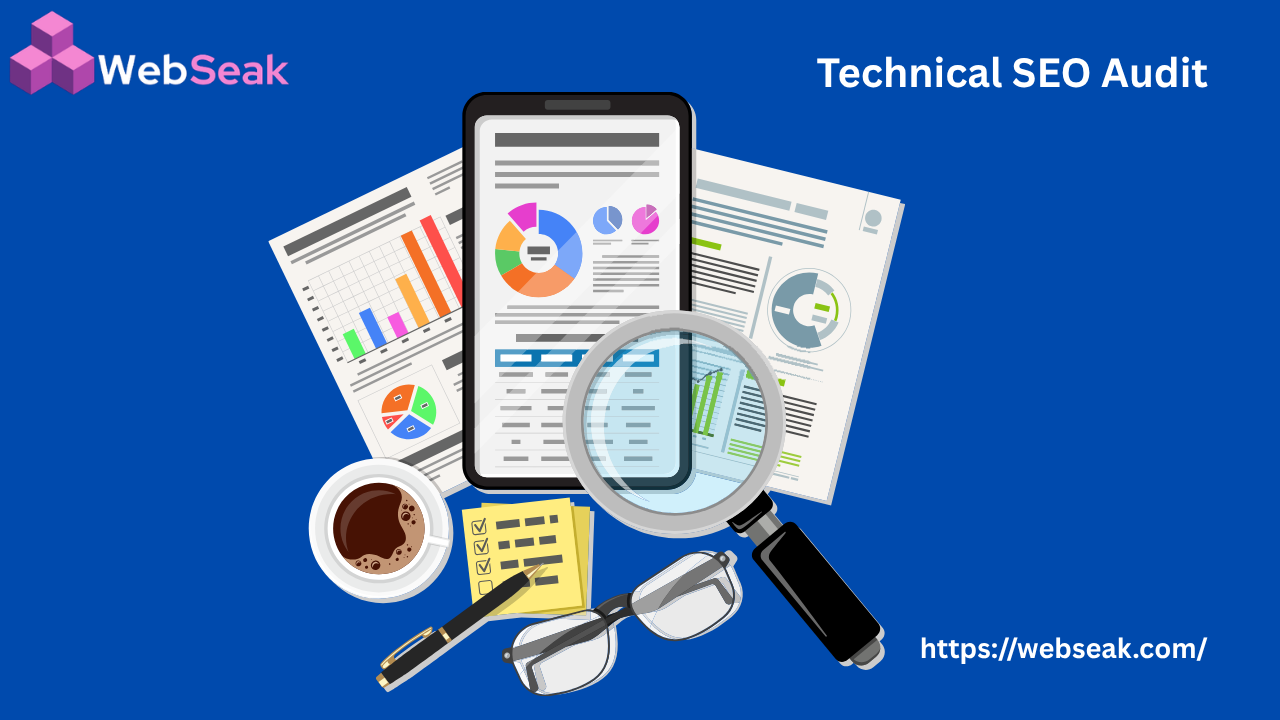
A Technical SEO Audit is the foundation of every successful SEO strategy. Even if your website has excellent content and high-quality backlinks, technical issues can prevent search engines from properly crawling, indexing, and ranking your pages.
Many businesses focus only on keywords and content while ignoring technical SEO. However, problems such as slow website speed, broken links, duplicate content, crawl errors, missing XML sitemaps, and poor mobile optimization can significantly affect your search rankings.
At Webseak, we provide comprehensive Technical SEO Audit services that identify hidden website issues and help improve your website’s performance, user experience, and Google rankings.
What Is a Technical SEO Audit ?
A Technical SEO Audit is a complete analysis of your website’s technical health. It helps identify problems that prevent search engines like Google from crawling, indexing, and understanding your website correctly.
Unlike On-Page SEO, which focuses on content and keywords, Technical SEO focuses on your website’s structure, speed, security, mobile usability, and overall performance.
The main objective is to ensure that search engines can access, crawl, and index every important page without any issues.
Why Is a Technical SEO Audit Important ?
A website may look attractive to visitors but still have technical problems that reduce its search engine performance.
A Technical SEO Audit helps you:
- Improve Google rankings
- Increase website speed
- Fix crawl errors
- Improve indexing
- Enhance user experience
- Reduce bounce rate
- Improve Core Web Vitals
- Increase organic traffic
Without technical optimization, your SEO efforts may not produce the desired results.
Benefits of Technical SEO Audit
Better Search Engine Rankings
Search engines prefer websites that are technically optimized.
Fixing technical issues improves your chances of ranking higher on Google.
Faster Website Speed
Website speed is an important ranking factor.
A technical audit identifies problems such as:
- Large image files
- Unoptimized code
- Slow server response
- Excessive scripts
Improving speed creates a better user experience.
Improved Website Crawling
Google uses bots to crawl websites.
Technical SEO ensures that search engines can access all important pages without encountering errors.
Better User Experience
A technically optimized website provides:
- Faster loading pages
- Mobile-friendly design
- Secure browsing
- Easy navigation
Happy visitors are more likely to stay longer and convert into customers.
Increased Organic Traffic
Technical improvements make it easier for search engines to understand your website.
Better rankings naturally result in more organic visitors.
What Does a Technical SEO Audit Include?
At Webseak, our Technical SEO Audit covers every important technical factor.
Website Crawl Analysis
We analyze how search engines crawl your website.
This helps identify:
- Broken pages
- Redirect chains
- Crawl errors
- Orphan pages
Proper crawling ensures every important page is indexed.
Website Indexing
Not every webpage should be indexed, while important pages must appear in Google.
We check:
- Indexed pages
- Non-indexed pages
- Duplicate pages
- Noindex tags
This ensures search engines only index valuable content.
XML Sitemap Audit
An XML sitemap helps search engines discover your pages.
We verify:
- Sitemap availability
- Sitemap accuracy
- Missing URLs
- Submission to Google Search Console
A proper sitemap improves indexing.
Robots.txt Analysis
The robots.txt file controls how search engines access your website.
We check for:
- Blocked important pages
- Incorrect directives
- Crawl restrictions
Proper configuration prevents indexing problems.
Website Speed Optimization
Website speed directly affects SEO and user experience.
Our audit checks:
- Page loading speed
- Image optimization
- Browser caching
- CSS optimization
- JavaScript optimization
- Server response time
A faster website improves rankings and conversions.
Core Web Vitals Audit
Google uses Core Web Vitals as ranking signals.
We analyze:
Largest Contentful Paint (LCP)
Measures loading performance.
Interaction to Next Paint (INP)
Measures responsiveness to user interactions.
Cumulative Layout Shift (CLS)
Measures visual stability during page loading.
Improving these metrics creates a better browsing experience.
Mobile SEO Audit
Most users browse websites using smartphones.
We check:
- Mobile responsiveness
- Mobile usability
- Touch-friendly design
- Responsive layouts
- Mobile loading speed
A mobile-friendly website is essential for modern SEO.
HTTPS and Website Security
Google prefers secure websites.
Our audit checks:
- SSL certificate
- HTTPS implementation
- Mixed content issues
- Security warnings
A secure website builds trust and improves rankings.
Broken Links Analysis
Broken links create poor user experience.
We identify:
- Internal broken links
- External broken links
- Broken images
- Redirect errors
Fixing these issues improves website quality.
Redirect Audit
Redirects should work correctly without creating unnecessary chains.
We analyze:
- 301 redirects
- 302 redirects
- Redirect loops
- Redirect chains
Proper redirects improve crawling efficiency.
Duplicate Content Audit
Duplicate content confuses search engines.
We identify:
- Duplicate pages
- Duplicate titles
- Duplicate meta descriptions
- Canonical tag issues
Resolving duplicate content improves SEO performance.
URL Structure Analysis
SEO-friendly URLs should be:
- Short
- Descriptive
- Keyword-focused
- Easy to understand
We identify URLs that need improvement.
Schema Markup Audit
Schema markup helps search engines understand your content.
We verify:
- Organization Schema
- Local Business Schema
- FAQ Schema
- Product Schema
- Article Schema
- Breadcrumb Schema
Proper schema improves search visibility.
Internal Linking Audit
Internal links help search engines understand website structure.
We analyze:
- Link distribution
- Anchor text
- Broken internal links
- Important page connections
Good internal linking improves SEO and user navigation.
Canonical Tag Audit
Canonical tags prevent duplicate content issues.
We verify:
- Correct canonical implementation
- Missing canonical tags
- Incorrect canonical URLs
Proper canonicalization improves indexing.
Image SEO Audit
Images should be optimized for both speed and search engines.
We check:
- Alt text
- Image compression
- File names
- Lazy loading
Optimized images improve performance.
Google Search Console Audit
We analyze your Search Console data for:
- Index coverage
- Crawl errors
- Manual actions
- Sitemap status
- Search performance
This provides valuable technical SEO insights.
Google Analytics & GA4 Audit
We verify:
- GA4 installation
- Event tracking
- Conversion tracking
- User behavior analysis
Accurate tracking helps measure SEO performance.
Common Technical SEO Issues
Many websites suffer from:
- Slow loading speed
- Broken links
- Missing XML sitemap
- Crawl errors
- Duplicate content
- Missing meta tags
- Poor mobile usability
- Redirect chains
- Incorrect canonical tags
- JavaScript rendering issues
Fixing these issues can significantly improve search performance.
Industries That Benefit from Technical SEO
Every website benefits from technical optimization.
Examples include:
- E-commerce websites
- Healthcare websites
- Real estate portals
- Educational institutions
- Law firms
- Manufacturing companies
- SaaS businesses
- Digital marketing agencies
Regardless of your industry, technical SEO improves website performance.
Why Choose Webseak for Technical SEO Audit?
Webseak provides detailed Technical SEO Audits using industry-leading tools and proven SEO practices.
Our audit includes:
- Complete technical analysis
- Actionable recommendations
- Website performance improvements
- Crawl optimization
- Core Web Vitals analysis
- Mobile SEO optimization
- Security review
- SEO implementation guidance
We focus on identifying problems that directly affect your Google rankings and business growth.
Frequently Asked Questions (FAQs)
How often should I perform a Technical SEO Audit?
We recommend conducting a Technical SEO Audit every 3 to 6 months, or after major website updates or redesigns.
Can technical SEO improve Google rankings?
Yes. Fixing crawl issues, improving page speed, optimizing Core Web Vitals, and resolving indexing problems can positively impact your rankings.
Is Technical SEO important for small businesses?
Absolutely. Technical SEO helps businesses of all sizes improve their website performance, attract more visitors, and generate more leads.
How long does a Technical SEO Audit take?
Depending on the size of the website, a complete audit typically takes 2 to 7 business days.
Does Webseak fix the issues found during the audit?
Yes. Along with providing a detailed audit report, our team can also implement the recommended technical SEO improvements.
Conclusion
A Technical SEO Audit is one of the most important investments for improving your website’s search engine performance. It identifies hidden technical problems that can prevent your pages from ranking well, even if your content and backlinks are strong.
At Webseak, our Technical SEO Audit goes beyond simply identifying issues—we provide practical recommendations and implementation support to improve website speed, crawlability, indexing, mobile usability, and overall SEO performance.
If you want higher Google rankings, better user experience, and sustainable organic growth, a professional Technical SEO Audit is the first step toward achieving your digital marketing goals.