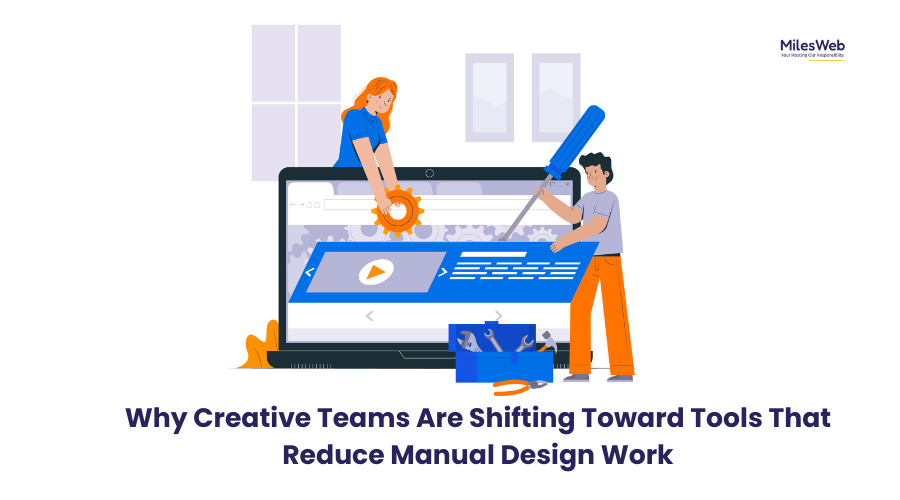
Creativity is all about bringing ideas into reality. The modern ecosystem has become incredibly demanding. Traditional design workflows are monotonous and require tedious manual tasks. But with digital evolution, designers design content for different campaigns in less time. They use the best AI builder with compelling themes and plugins that bring a captivating appearance. That’s exactly why creative teams are now embracing tools that automate repetitive tasks and let them focus on the work that truly requires imagination.
This transition is about survival and scaling. Businesses maintain consistent branding across several thousands of design outputs. They want faster creativity, fewer mistakes, and more experimentation opportunities. On today’s date, many tasks like buying professional email purchase have been automated that allow designers to use their intuition power and bring more creativity with modern tools. In this blog, we will discuss why this shift is happening.
Table of Contents
The Transition of Designers Towards Tool-Based Designing
Automation Frees Up Time for High-Value Creative Thinking
Designers spend hours in resizing banners, exporting assets, or adjusting layouts for different platforms. These tasks may seem small, but gradually they pile up, consuming the majority of a designer’s workday. Automation tools deplete the routine work burden in no time. It gives designers freedom to conceptualize and explore new directions.
This shift transforms the designer role. Instead of being bogged down with production work, they get to be strategists and innovators. Its main objective is to have more scope to experiment with color, typography, and storytelling. Automation doesn’t replace creativity; it enhances it by removing everything that stands in its way.
Consistency Becomes Easier Across Brands and Campaigns
Brand consistency is one major challenge for the growing companies. When many designers, and sometimes multiple agencies, work on the same brand, maintaining uniformity becomes difficult. Manual designing tasks worsen this issue because designers interpret guidelines slightly differently. Tools with built-in brand kits, templates, and auto-adjusted layouts help ensure that every output follows the exact same branding rules.
Equipped with brand templates and assets, tools help teams create unlimited custom alternatives. Teams no longer spend time worrying about creating typography and formatting. Creativity in the creative teams does not skip a beat. With brand consistency in over a hundred different ads, growing brands earn their audience’s recognition and trust.
Faster Iterations Mean Faster Campaign Launches
Marketing campaigns should be completed on deadline. Campaigns must align with the trending topics. When teams rely on manual design processes, however, even simple tasks, like changing text, resizing elements, or changing layouts, take longer than needed. With automation, instant iterations are possible, and campaigns can go live in hours, not days.
This speed becomes a competitive advantage. Brands that stay relevant are those that can adapt quickly, easing designer stress and unrealistic deadline racing while creating a smoother and more aligned relationship with marketing and content teams. Everyone wins when design execution and strategy sync.
Enhanced Cross-Departmental Collaboration
Traditionally, designers, marketers, copywriters, and project managers have worked in silos. Intermittent communication, poorly versioned documents, and vague briefs are all contributing friction points in a workflow. In contemporary design, everything has a walking home. Every design file and every set of brand assets are stored, along with comments, edits, and approved workflows, in a centralized repository.
No longer do teams spend time manually searching for the most recent version of a document, nor do they squander time waiting for feedback. Users can work on the same document at the same time, eliminating the possibility of miscommunication. Rather than scanning countless emails, the feedback process becomes more cohesive. The end result is a single unit, instead of a bunch of people working in silos.
Scaling Costs Without Increasing Content Production Costs
As content needs proliferate, so do advertising-related graphics. Social media needs its own graphics, as do landing pages, newsletters, presentations, etc. It is inefficient and expensive to recruit new designers with every growth iteration. The ideal is a growth tech stack that allows organizations to scale content production without expending additional costs. One designer can create large variations of a document with a minimum time investment using modular templates and layouts that auto-adjust when new content is added.
Gamification is the new automation trend. With enough balance between demand, production, and creativity, agencies can achieve the goal of maintaining a high volume and quality content output.
Reducing Errors and Maintaining Professional Quality
Manual tasks increase the chances of human error, misaligned icons, missing elements, and inconsistent spacing issues with font sizes. The visual identity of these brands and the subsequent mistakes are revised at great costs. Automated systems decrease these mistakes by applying templates, ensuring guidelines, and using consistent brand policies every time.
Error fostering across the company’s creative team is to optimize the department’s credibility. Marketers gain confidence, approvals speed up, and brands are kept professional across all platforms. Designers spend time polishing their concepts rather than correcting the mistakes made by automation. Reliability, in the end, improves fluidity and brand image of these systems.
Conclusion
Creative teams are now reducing the manual design task because of increasing digital tool demand. Technology brings more speed, accuracy, scale, and collaboration. Manual workflows keep up with today’s fast-moving marketing cycles, diverse platform requirements, and consistent branding. Automation empowers designers to spend time on meaningful creativity while handling repetitive background tasks.
By investing heavily in design-related tools, brands will continue to leave behind those brands that use traditional methods, as the future of creativity will be about societal growth through designer empowerment rather than designer replacement. Companies can produce higher quantities of better-quality work and increase the impact of creative work by using all available tools to improve the efficiency and productivity of creative teams.